 Guide
GuidePilates vs Yoga in Dubai: Which One Is Right for You?
Pilates vs Yoga in Dubai: Which One Is Right for You?
Two disciplines dominate Dubai's boutique fitness conversation. Walk into any wellness-forward café in Jumeirah, sit near a table of health-conscious expats in DIFC, scroll through the fitness section of any Dubai lifestyle publication — and you'll find the same debate running: pilates or yoga? Both have built passionate communities in this city. Both are available at an extraordinary range of studios across every neighbourhood. And both promise versions of the same thing — a stronger, more flexible body, a calmer mind, and a practice you can sustain for decades. But they deliver these outcomes through very different means, and understanding those differences will help you choose where to put your time, money, and physical energy.
This is not an argument that one is better than the other. They are genuinely different disciplines with different philosophies, different physical demands, and different ideal practitioners. For many people in Dubai, the answer ends up being both — but knowing where to start matters.
The Fundamental Difference
Yoga is a spiritual and physical tradition with roots stretching back thousands of years in the Indian subcontinent. At its core, it is a practice of union — between body and breath, between individual consciousness and something larger. The physical postures (asanas) that most Western practitioners associate with yoga are one element of a much broader system that includes breathing practices, meditation, ethical principles, and philosophical inquiry. In Dubai's boutique studios, this spectrum appears in full: from deeply spiritual Ashtanga and Kundalini traditions to highly physical hot yoga and flow classes that prioritise athletic development over philosophy.
Pilates is a twentieth-century invention. Joseph Pilates developed his method during World War One, initially to rehabilitate injured soldiers and internment camp prisoners using improvised equipment. His system was refined through decades of work in New York, where he attracted a clientele of dancers, athletes, and performers seeking a method that built functional strength and corrected postural imbalances. It has no spiritual dimension and makes no philosophical claims. It is a physical discipline focused entirely on how the body moves — specifically on building core strength, improving spinal alignment, and developing the controlled, precise movement that supports everything else you do.
What Each Discipline Does to Your Body
Understanding the physical effects of each practice helps clarify which one addresses your specific needs.
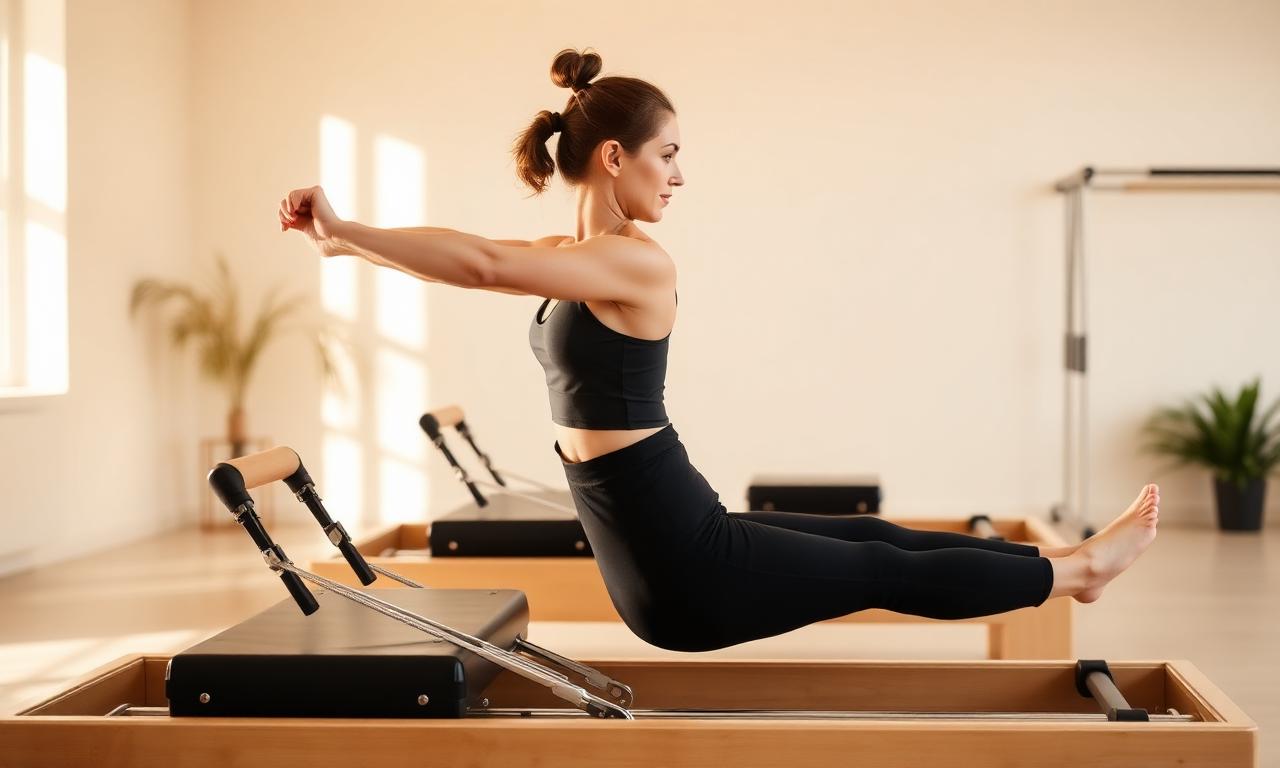
Pilates builds functional strength from the inside out. The emphasis on core stabilisation means that every exercise, regardless of which body part it targets, requires active engagement of the deep abdominal and spinal muscles. Over time, this builds a kind of foundational strength that changes how you move in everyday life. Back pain — one of the most common complaints among Dubai's desk-working professional population — often responds dramatically to a consistent pilates practice, particularly reformer work that decompresses the spine and activates the muscles that support it. Pilates also builds significant strength in the hip flexors, glutes, inner thighs, and shoulder stabilisers — the postural muscles that tend to weaken in sedentary lifestyles.
Yoga develops flexibility, balance, and body awareness alongside strength. A consistent yoga practice produces genuine improvements in flexibility that pilates, with its shorter range of motion work, doesn't match. The standing balance poses develop proprioception — your body's awareness of its position in space — in ways that translate directly into reduced injury risk in sports and everyday movement. Dynamic styles like Vinyasa build cardiovascular fitness and muscular endurance alongside flexibility. Restorative and Yin styles target the connective tissues — fascia, tendons, and joint capsules — that other forms of exercise don't reach.
Recovery and injury rehabilitation: Both disciplines are recommended by physiotherapists, but for different profiles. Pilates is generally the first recommendation for lower back issues, postural problems, post-surgical rehabilitation, and conditions involving joint instability. Yoga is often recommended for stress-related physical manifestations, general tightness and inflexibility, and for building body awareness that helps prevent injury in athletes.
What Each Discipline Does to Your Mind
This is where the two practices diverge most sharply, and where personal values matter most.
Yoga, in any of its forms, involves the breath as a primary tool. Pranayama (breath control) is woven into every class, from the simple ujjayi breathing of a Vinyasa flow to the more complex techniques of Kundalini practice. The effect on the nervous system is measurable: controlled breathing activates the parasympathetic nervous system, reducing cortisol levels and inducing the physiological state associated with calm and recovery. Many yoga practitioners in Dubai — particularly those who work in high-pressure environments in finance, real estate, or entrepreneurship — describe their practice as the primary tool they use for stress management.
Pilates is not designed to be meditative, but it produces a state of focused concentration that many practitioners find equally valuable. The precision that reformer pilates demands — constant attention to form, breath, spring resistance, and the position of multiple body parts simultaneously — leaves no mental bandwidth for the anxieties and to-do lists that occupy most of the day. The result is a workout that functions as a form of mental decompression without any spiritual framing, which suits practitioners who want the neurological benefits of focused present-moment attention without the philosophical context.
The Dubai-Specific Context
Dubai's fitness culture adds a layer of practical context to this comparison that matters.
Timing and scheduling: Dubai's heat makes outdoor exercise challenging for nine months of the year, pushing fitness indoors and making the studio class format more central to people's routines here than in many other cities. Both pilates and yoga work perfectly in air-conditioned studio environments, which means neither discipline has a seasonal disadvantage.
Community: Both disciplines have built genuine communities in Dubai that extend beyond the studio walls. Yoga communities here tend to be broad — organized around studios, teachers, and practice styles, but also through regular events, retreats, and social meetups. Pilates communities tend to be slightly more studio-specific and tighter-knit — the shared intensity of a reformer class creates bonds among regulars that casual yoga drop-ins don't always develop.
Price points: In Dubai, both disciplines are offered across a wide range of price points, but reformer pilates tends to occupy the higher end of the boutique fitness market due to the cost of equipment. A mat yoga class at a quality studio might run 80 to 120 AED for a drop-in session, while a reformer pilates class at an equivalent quality level will more commonly be 150 to 200 AED. This is not a reason to choose yoga over pilates, but it is a practical factor in sustainability — a practice you can afford to attend regularly is better than one you attend once a month because you're managing costs.
Who Should Start With Pilates
Reformer or mat pilates tends to be the better starting point if any of these describe you.
You have a history of back pain, hip issues, or postural problems from desk work. The physiological rehabilitation focus of pilates makes it the safer and more targeted entry point for anyone with existing structural issues.
You want measurable strength and body composition changes as a primary goal. Pilates, particularly reformer work, produces visible changes in muscle tone and postural appearance faster than most yoga styles.
You are an athlete or active person looking for supplementary training. The cross-training value of pilates is well-documented across sports from football to tennis to cycling. Its emphasis on the posterior chain and deep stabilisers addresses the specific weaknesses that most sport-specific training creates.
You prefer a structured, technique-driven environment. Pilates classes follow repeatable sequences that improve over time. Progress is observable and measurable, which suits goal-oriented practitioners.
Who Should Start With Yoga
Yoga tends to be the better entry point if you recognise yourself in any of these.
You are starting from a very low baseline of flexibility. If forward folds are impossible and hip rotation is severely restricted, the progressive mobility work of yoga addresses these limitations more directly than pilates.
You are dealing with high stress levels and want your fitness practice to actively support mental health. The breath-centred, meditative elements of yoga — particularly in Yin, Restorative, or slower Vinyasa styles — provide neurological benefits that a physical-only practice doesn't replicate.
You want a practice with philosophical depth. For practitioners who are drawn to questions about meaning, consciousness, and wellbeing beyond the physical, yoga offers a framework — as much or as little of it as you want to engage with — that pilates simply doesn't have.
You have limited budget for fitness. Mat yoga classes are generally more accessible than reformer pilates, and there are strong free and low-cost yoga resources (classes in parks, online content) that don't exist in the same way for reformer work.
The Case for Doing Both
Most long-term practitioners of either discipline eventually develop curiosity about the other, and for good reason. The two practices are powerfully complementary. Pilates builds the core strength and body awareness that makes yoga postures more accessible and safer. Yoga builds the flexibility and breath consciousness that makes pilates exercises more effective and sustainable. Practitioners who do both typically report that their progress in each accelerates significantly when the other is part of their weekly routine.
In Dubai, this combination is increasingly practical. Platforms like Studioo list both disciplines across the city's boutique studios, making it possible to attend a reformer pilates class on Tuesday morning and a Vinyasa flow on Thursday evening without the commitment of memberships at two separate studios. The flexibility of last-minute booking — up to 50% off available spots — means that building a two-discipline practice doesn't have to be twice as expensive as a single-discipline one.
Making the Decision
If you genuinely have no strong preference and are choosing from scratch, here is the simplest framework: start with reformer pilates if your primary concern is physical structure — strength, posture, injury prevention, body composition. Start with yoga if your primary concern is the intersection of physical and mental wellbeing — stress, flexibility, mindfulness, and a practice that connects to something beyond the workout.
If you already practice one discipline and are wondering whether to add the other, the answer is almost always yes. Dubai's boutique fitness scene makes both exceptionally accessible. You have no reason to choose permanently.
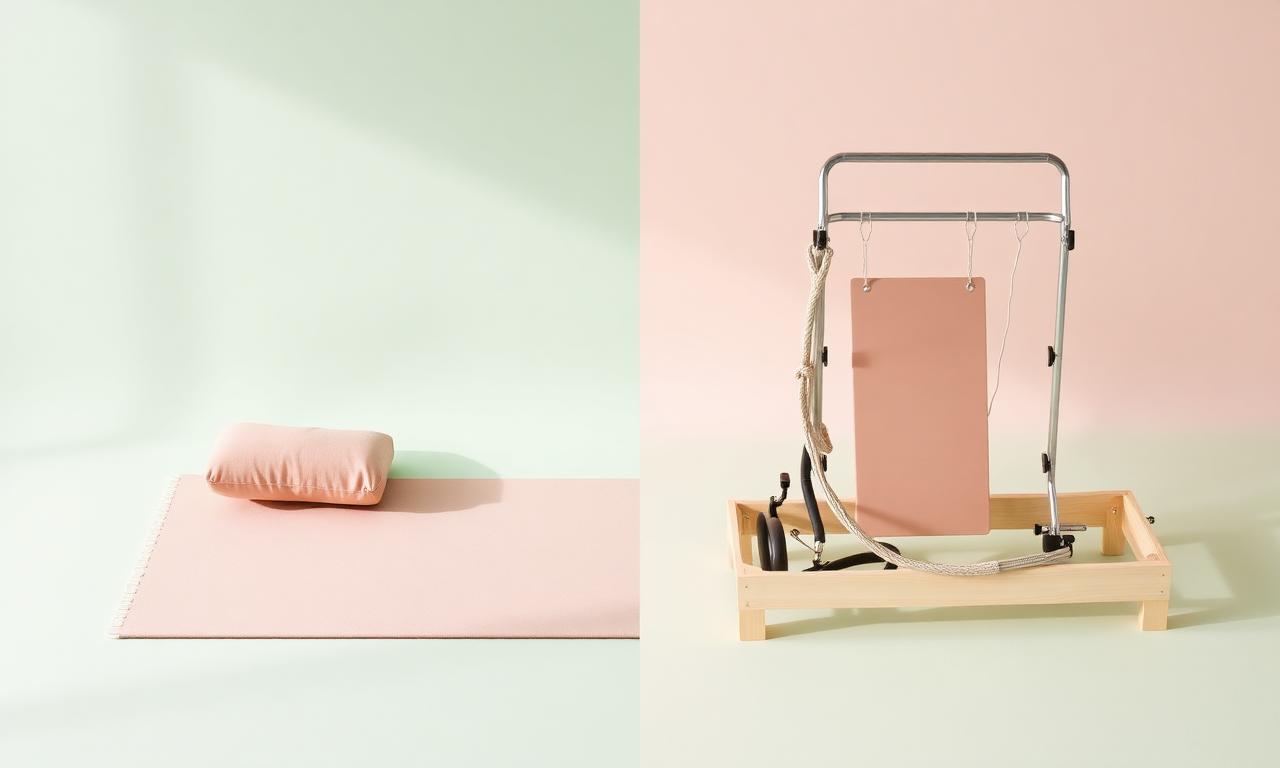
The reformer and the mat are both waiting. The only real question is which one you're most curious about right now.