 Barre
BarreThe Best Barre Classes in Dubai: A Complete Guide
The Best Barre Classes in Dubai: A Complete Guide
Ask someone who does barre to describe it and you'll usually get an answer that sounds slightly contradictory: it's low-impact but incredibly intense, it doesn't look hard until you're doing it, and it's slower-paced than almost any fitness class you've attended while simultaneously being one of the most effective things you've ever tried. All of this is accurate. Barre is genuinely unique in the fitness landscape, and in Dubai — where the boutique fitness scene has developed remarkable depth and quality — it has built one of the city's most dedicated practitioner communities.
This guide covers everything you need to know about barre in Dubai: what the discipline actually is, what it produces physically, what a class looks like from the inside, and how to navigate the city's studio options intelligently.
What Is Barre?
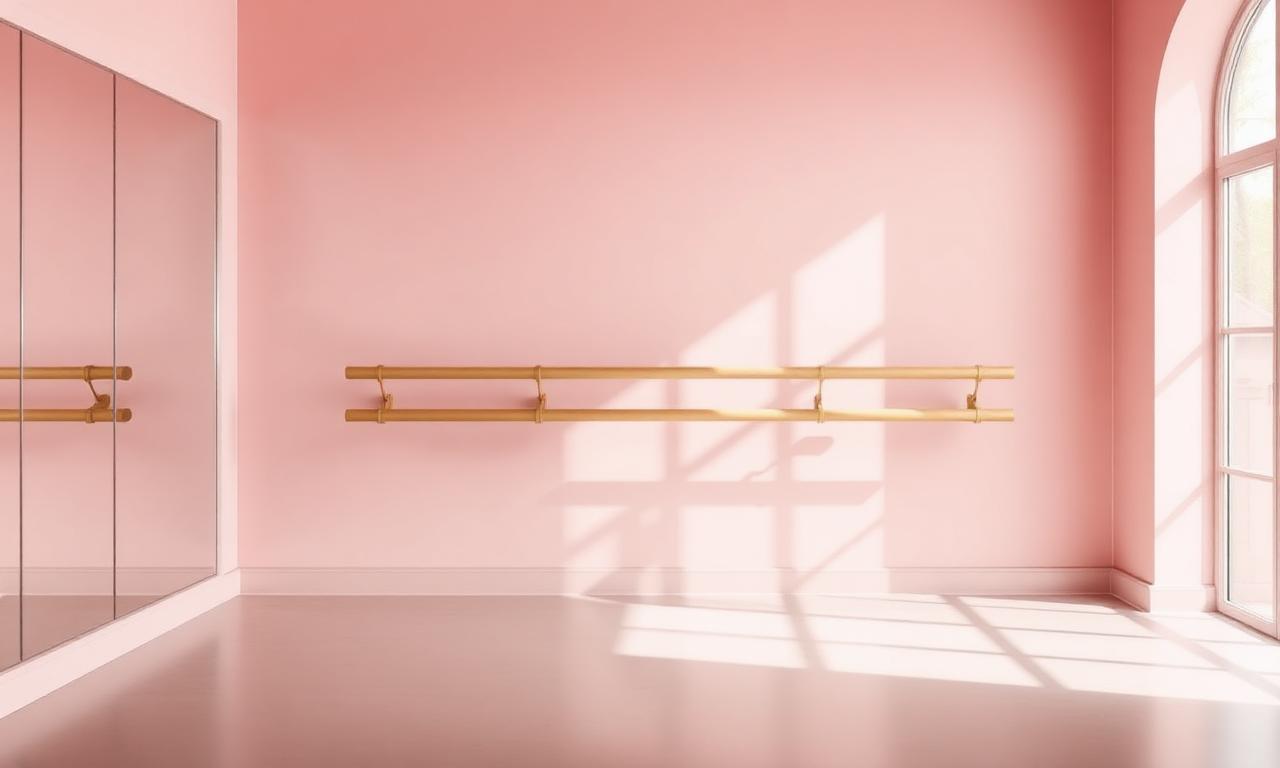
Barre is a fitness method that draws from classical ballet training, Pilates, yoga, and strength conditioning. It is named for the ballet barre — the horizontal handrail used by dancers for balance — which features in most classes as a prop rather than a focus. The method was developed in the 1950s by German dancer Lotte Berk and popularised through the work of various studios and chains over subsequent decades, producing several distinct styles that now coexist in Dubai's market.
What makes barre distinctive is its use of small, precise, high-repetition movements performed in positions of muscular challenge. Where conventional strength training asks muscles to work through long ranges of motion with heavy loads, barre asks them to maintain contraction through short ranges with lighter loads for extended periods. This produces a specific type of muscular endurance work that targets the smaller, stabilising muscles that most conventional exercise ignores.
The result — after consistent practice — is a distinctive combination of long, lean muscle development, exceptional posture, and core strength that practitioners describe as transformative. The difficulty is front-loaded: the first few classes feel disorienting because the muscles being engaged have often never been trained in this way, and the burning sensation in the targeted areas can be surprisingly intense for what looks like gentle movement. Experienced practitioners describe this as "the shake" — a sign that the target muscle is working at maximum capacity.
The Physical Results of Regular Barre Practice
Understanding what barre actually produces in the body helps set realistic expectations and explains why it has attracted such a devoted following.
Postural transformation: Barre emphasises spinal elongation, shoulder retraction, and hip stability in ways that directly correct the forward-head, rounded-shoulder posture that desk work creates. Consistent practitioners almost universally report significant improvement in how they carry themselves within the first six to eight weeks of regular attendance.
Core strength: Like pilates, barre integrates core engagement into every exercise. The plié, the arabesque, the relevé — all of these classical movements require active deep core stabilisation. Over time, this builds the same foundational strength that pilates targets, through a different movement vocabulary.
Lower body definition: The lower body is the primary focus of most barre classes — specifically the glutes, inner thighs, and the small muscles around the hip joint. The high-repetition, small-range work in these areas produces changes in muscle tone that practitioners often describe as more noticeable than those from conventional lower body training.
Flexibility: Barre classes include significant stretching components, typically woven throughout the class rather than concentrated at the end. Regular practice produces improvements in hip flexibility and hamstring length that benefit everything from running to sitting comfortably at a desk.
Injury resilience: The emphasis on joint stability and the careful, controlled nature of barre movement makes it particularly safe for people with existing injuries. Many Dubai residents turn to barre as a rehabilitation bridge — something they can do while recovering from a knee injury, a hip labral issue, or lower back problems — and discover it becomes a permanent part of their fitness life.
What Happens in a Barre Class
A typical barre class in Dubai runs between 45 and 60 minutes and follows a sequence that has been fairly consistent across different studio styles since the method's development.
Warm-up (5-10 minutes): The class usually begins away from the barre, with standing or mat-based exercises designed to raise body temperature, activate the core, and introduce the movement quality that the rest of the class demands. Light weights — typically 1 to 2 kg — may be introduced here for upper body work.
Upper body section (5-10 minutes): Barre includes dedicated work for the arms, shoulders, and upper back using small hand weights. The exercises focus on the same small-range, high-repetition approach as the rest of the class, targeting the muscles responsible for posture and arm definition.
Barre work (20-25 minutes): The central section of the class takes place at or near the barre. Standing exercises in various positions — first position, second position, parallel, turned-out — target the thighs, glutes, and calves. Seat work (targeting the glutes specifically) is often the most intensely felt section of the class. Balance challenges are introduced as participants advance.
Core and floor work (10-15 minutes): The final section moves to the mat for core work — abdominal exercises, back extension work, and hip flexor challenges — followed by thorough stretching.
Cool-down and stretch: Every good barre class ends with a dedicated stretch sequence that allows the worked muscles to lengthen while the heart rate returns to normal. This is not optional — it's an integral part of the physical outcome.
Barre Styles in Dubai
Dubai's barre market has fragmented into several distinct styles, which is worth understanding before you commit to a studio.
Classical barre: Closest to the original Lotte Berk method, with strong connections to ballet tradition. Movement quality and form are emphasised over speed. Studios offering this style tend to attract clients who value the dance heritage of the method and want a more technically rigorous experience.
Barre fusion: The dominant style in Dubai's boutique market. These classes blend classical barre elements with pilates, yoga, and occasionally HIIT intervals to create a more varied, often more energetic session. The trade-off against classical barre is some depth of barre technique in exchange for variety and higher perceived intensity.
Cardio barre: A specific format that adds significant choreography and movement sequences between the traditional barre exercises, bringing the heart rate up more aggressively than standard classes. Appeals to practitioners who want cardiovascular conditioning alongside the barre's strength and flexibility benefits.
Barre stretch / recovery barre: Slower-paced classes focused heavily on the flexibility and restorative components of barre practice. These work well as supplementary sessions for clients who also attend more intense classes, or for practitioners who want the barre's postural and flexibility benefits without significant muscular work.
Finding the Right Barre Studio in Dubai
Dubai's barre studios are distributed across the city's main fitness corridors — Dubai Marina, JBR, Downtown, DIFC, Jumeirah, and Dubai Hills are the primary concentrations. Here is how to evaluate options.
Instructor credentials: Look for instructors trained in recognised barre methodologies — Ballet Barre International, Pure Barre, Physique 57, or equivalent certifications. In Dubai's transient market, instructor quality varies significantly, and the right training produces a meaningfully better teaching outcome.
Class size: Barre requires careful observation of client form to prevent injury, particularly in the classical lower body positions. Studios that cap classes at eight to ten participants provide a level of individual attention that larger classes cannot. Be cautious of barre offerings in commercial gyms where classes may run with twenty-plus participants.
Equipment: Good barre studios invest in proper barres, appropriate flooring (Marley flooring or similar), grip socks requirements, and quality light weights. The physical environment tells you something about the studio's investment in the method.
Community fit: Barre communities in Dubai tend to be notably loyal and close-knit. Visit a studio as a drop-in and pay attention to whether the community feels welcoming to newcomers or cliquish and closed. You want a studio where the regulars are warm to first-timers — you'll eventually be one of those regulars.
What to Wear to a Barre Class
Form-fitting clothing is non-negotiable — loose clothing makes it impossible for the instructor to observe your alignment, which defeats one of the primary benefits of attending a taught class. Leggings and a fitted top are standard. Grip socks are required at most Dubai barre studios — they prevent slipping in positions of balance and protect the studio's floors. Most studios sell grip socks at reception, but owning your own pair is worth the investment if you attend regularly.
Footwear beyond grip socks is not needed. Some classical studios permit soft ballet slippers for an authentic feel, but this is optional and not something you need to source before your first class.
Accessing Dubai's Best Barre Studios Without Overspending
Barre classes in Dubai's boutique studios typically price between 100 and 180 AED for a drop-in session, with class packs offering per-session rates of 70 to 120 AED. Like reformer pilates, the cost of consistent attendance at standard pricing can accumulate quickly.
The same strategy that applies to pilates and yoga applies here: last-minute booking platforms like Studioo aggregate available spots at Dubai's top barre studios and release them at discounts of up to 50%. For a discipline where the physical benefits compound significantly with consistency — three or more sessions per week produces noticeably faster results than one or two — this pricing advantage has a direct effect on your ability to train at the frequency that drives real change.
It also enables the studio exploration that is genuinely valuable when starting a new practice. Barre styles vary enough between studios that the studio you enjoy most may not be the one you assumed. Trying four or five options through discounted last-minute booking before committing to a class pack is a significantly better use of your money than committing to the first studio you find and hoping for the best.
How Long Before You See Results?
The honest answer is that you'll feel results before you see them. The postural awareness and muscular engagement that barre develops becomes noticeable in how you move — you'll stand differently, hold yourself differently — within the first few weeks. Visible changes in muscle tone and body composition take longer: consistent practitioners generally report significant visible change after six to eight weeks of three or more sessions per week.
The most important predictor of results is consistency. Barre, like pilates and yoga, is a practice that compounds — each session builds on the previous one, and the neural adaptations that produce efficient, precise movement develop only through repetition. Two classes a week for two months produces dramatically better results than six classes in one week followed by a three-week gap.
Build the habit first. The results follow.